Click on the story and the page will take you there.
Lincoln in NY
Lincoln and Brittany were assigned the same lunch hour, since they worked together. It just seemed logical. Kuranski gave them an “Out to Lunch” sign to put atop the 72C-US Light Cherry Finish Compact Computer Desk while they were gone and the two of them ate out back, in the corner of the storeroom, at a folding table so old it didn’t have a model number. They sat at opposite ends, facing each other. It looked odd, the two of them facing each other with so much table and nothing else between them. But the only other choice was to sit next to each other and stare at the wall, which would’ve been weird. The wall was painted an off-white and had a big yellow water stain running down towards the very center of the table. Lincoln tried to think of things to say to Brittany, who just looked down at her phone. She sent and read text messages. She played games. She lol’ed. It confused Lincoln when she laughed like that. In his day, people who laughed by themselves were thrown into asylums. “In my day,” he thought.
After sixty minutes, exactly, Kuranski found an excuse to walk by. “That’s an hour, you two,” he’d say. He said it every day. He said it without breaking stride. Sometimes, he would knock on the old folding table with a knuckle or two, or sometimes he would pat Lincoln on the back. “My star employee,” he’d say. Brittany always waited for him to turn back into his office. Then she’d shake her head. “God, I hate him,” she’d whisper to Lincoln.
A young Asian couple stood at the head of the line, which zigged and zagged between velvet ropes and past the file folders and paper clips and school supplies and reams of copier paper, between the printers, around the office furniture, to end at Lincoln’s computer table. The couple had a small child with them. The father’s head was round, as was his stomach. Brittany leaned against the wall behind Lincoln’s desk, looking bored. The line extended out through the revolving doors so that Kuranski had to put Kanye there to keep customers from getting trapped inside the door itself. They once counted the people on line–from Lincoln’s desk, around the office furniture, between the printers, past the reams of copier paper and school supplies and paper clips and file folders–at 150. Kuranski smiled and rubbed his hands together that day.
Lincoln’s face always lit up around children. “Do you know who I am?” Lincoln asked the little girl. Banners covered the windows. “Appearing Daily,” they screamed. “THE Abraham Lincoln!” The signs pulled people inside; and the velvet ropes promised them they’d be involved in something important if they just got on the line. They were Kuranski’s idea, the ropes. They were an example of creating a demand. Genius. “Uhhh,” the little girl replied. “Do you know what I did?” “You…you chopped down a cherry tree?” “You couldn’t tell a lie.” “You had a blue ox for a friend.” “You walked softly and carried a big stick.” “You grew up in a log cabin.” “You were shot in the head.”
Lincoln’s mother Nancy died from milk sickness when he was only nine. It is believed he suffered from Marfan’s syndrome. His last known descendant died in 1985.
“I find history reassuring,” Mrs. Toussant said. “Do you find that odd? Oh, I don’t mean the facts. I know how horrible the facts have been for our people. The facts are fairly lousy, actually, when you think of it. But I still find it reassuring, history. Its existence, I mean. It sort of envelopes you. Wraps you up and makes you feel as if everything’s okay. Makes you a part of something, a link in a long chain. I think it takes away one’s loneliness. How can you be lonely when you’re part of something that extends and extends? Does this make any sense at all?” “Of course it makes sense, ma,” Robin answered. Robin was not Mrs. Toussant’s daughter…
The local Rs decided to honor Lincoln. They invited him to the county office, where they all stared at him, wide-eyed with admiration. Their eyes did not look like normal human eyes, but cartoon eyes, there was so much admiration in them, too much for real life human eyes to hold. “The embodiment of our ideals,” is what they called Lincoln. The chairman of the party listed those ideals: freedom, liberty, personal responsibility, top hats, beards without mustaches, war. He shook Lincoln’s hand in front of a room of press and photographers. He held his hand in Lincoln’s for an unnaturally long time as bulbs flashed over and over in front of them. The resulting photos looked as if they’d caught Lincoln and the county chair perfectly, in that one second when their hands met. This is called truth in advertising.
Speaking of eyes…
The county chair’s eyes were normal, human-sized. They did not look like cartoon eyes. They were not full of admiration. They looked tired. Lincoln had several theories explaining why the county chair’s eyes were different from the rest of the Rs’ eyes. One theory was fatigue. One theory was age. One theory was cynicism. One theory was based on another theory concerning the difference between a paid employee and a volunteer. One theory was the chairperson’s Maple Cross Finish desk and High-Backed Leather Executive Chair. One theory had no name nor any way to describe it.
When Lincoln started to learn about 21st-century prices, he stole into Kuranski’s office and asked him for some overtime.
“Overtime? You’re here later than everyone else already.”
“Then might I ask if you expect to be moving up in the organization any time soon?”
“Moving up?”
“I’d be interested in the manager’s position when you do.”
“I’m not moving up.”
“Certainly, you expect to be climbing the corporate ladder here at Staples.”
“What corporate ladder?”
“If I’m to fulfill my dream of being a twenty-first century president, I need to show the public I can be a twenty-first century success. What better way than to show success here at Staples?”
“There’s no moving up here Lincoln. I’ll see what I can do about getting you some hours in the warehouse, though.”
“Well, Brittany,” Lincoln said. “I suppose I have something of a confession to make. I know you have all asked me time and again my reasons for coming back. And I likewise know that I have given rather frivolous answers: that Mary’s worrisome ways drove me off, or Boothe’s Latin monologues tired me. And while there is certainly an element of truth to each of those answers, the fact is I am an ambitious soul. My ambitions in the afterlife are no less compelling than they were while I lived. Unfortunately for me, heaven, heaven is a place, a place where nothing, nothing ever happens. This produces a restlessness in me that brings me back, in order to fulfill my ambitions. I am here to become president again. Barring that, I would settle for any of the 21st centuries examples of success: a CEO, fashion designer, professional athlete, pornographic movie actor, or singer.
“In keeping with full disclosure, I shall now answer all of the questions everyone has asked me about the afterlife and my return: yes, I have returned before; I have only returned as me; I don’t know if I could’ve returned as someone else, or an animal, a snippet of song, or an idea, as I have only wanted to come back as myself; I don’t know; yes; the same, but sort of different; no, I do not know if they will send anyone to take me back, although now that you mention it, I am worried; and this final one is an inappropriate question to ask a married man.
“And now for the bad news, Brittany: it has come to my attention–from none other than Mr. Kuranski himself, that the company has no intention of ever promoting anyone here in the store. Do you understand what that means? That if you stay here, you’ll never amount to anything.”
“And?”
THE FOLLOWING PHRASES HAVE BEEN VOCALIZED BY BOOTHE IN THE AFTERLIFE, EITHER IN CONVERSATION OR AN ANGRY TYPE OF MUTTERING ALMOST BUT NOT QUITE UNDER HIS BREATH, WHICH MAY OR MAY NOT HAVE ACTUALLY MEANT HE WAS ANGRY AT TIME OF SAID UTTERANCE SINCE HE IS ONE OF THOSE WHO ALWAYS SOUNDS ANGRY. IT SHOULD BE NOTED THAT SINCE THE AFTERLIFE IS FREE OF THE SPACE-TIME CONTINUUM–THAT MISERY THAT BRINGS NOTHING BUT PAIN TO US POOR MORTALS–IT CAN NOT BE QUITE FIGURED OUT THE TIME PERIOD OVER WHICH THESE VOCALIZATIONS TOOK PLACE, I.E. HAS IT SLOWLY ESCAPED HIS LIPS OVER A NEAR-INFINITE AMOUNT OF TIME, INCLUDING THE PAST PRESENT OR FUTURE, DURING WHICH STATISTICALLY JUST ABOUT EVERY COMBINATION OF SYLLABLES POSSIBLE IS GOING TO HAVE TO POP OUT AT SOME POINT, OR HAS IT TAKEN PLACE OVER SAY TEN MINUTES OR SO, IN ONE OF HIS CRAZY-ASS RANTS THAT DRIVES EVERYONE UP HERE NUTS?:
E PLURIBUS UNUM
VENI VIDI VICI
HIC HAEC HOC
AMO AMAS AMAT
AFFIDAVIT
CARPE DIEM
WHERE THE HELL IS LINCOLN? HAS HE GONE? AGAIN?
SIC SEMPER TYRANNIS
OH, THAT SON OF A BITCH AIN’T GETTIN’ AWAY WITH THIS
I’LL DRAG HIS SORRY ASS RIGHT BACK
AUT VIAM INVENIUM AUT FACIAM
No one noticed him, somehow, when he first came back, making his way up Broadway to the old hotel he’d stayed in, back when he was still nobody, full of longing, for what he didn’t even know, as if there was something beyond the mere existing he’d been doing since childhood, as if life, real life, was something closed off to the great masses, of which he feared he was a part, and each day it seemed his mad need to find the key to that life, the secret entrance, the magic words, grew more and more desperate so he came to New York then, to make his name known and to start his climb, and now here he was coming back to where it all began, The Astor Hotel, a mere office building now, outpaced, squatting in the shadows of its taller neighbors where no one noticed him until there he was, next to the fax machines saying this is right where the front desk stood, patting a 4100e laser plain paper machine as if it were the counter he’d stood at decades earlier, and telling everyone and no one at once about the young man behind the desk who was really quite courteous, in a deep voice and strong, and everyone noticed him then and they listened and they stopped what they were doing and they gathered around him; customers stopped browsing, employees walked out from behind registers, some coming all the way out from the storeroom, and even passersby somehow noticed and started pushing in from the street, and even Kuranski finally realized work had come to a stop, so he raced out, ready to scream but found instead the largest crowd the store had ever seen, rubbing his hands together until sweat broke out on his bald head and he offered Abe a job, and Abe took it, greeting people, like a lot of retirees did in stores nowadays. Then he walked all the way up to Bleeker Street, to Brady’s old studio where he told the owner he’d always liked the natural light streaming in, that he was sure that’s why Brady’d picked there to work, and the owner Mrs. Toussant showed him the photo she kept in the study:
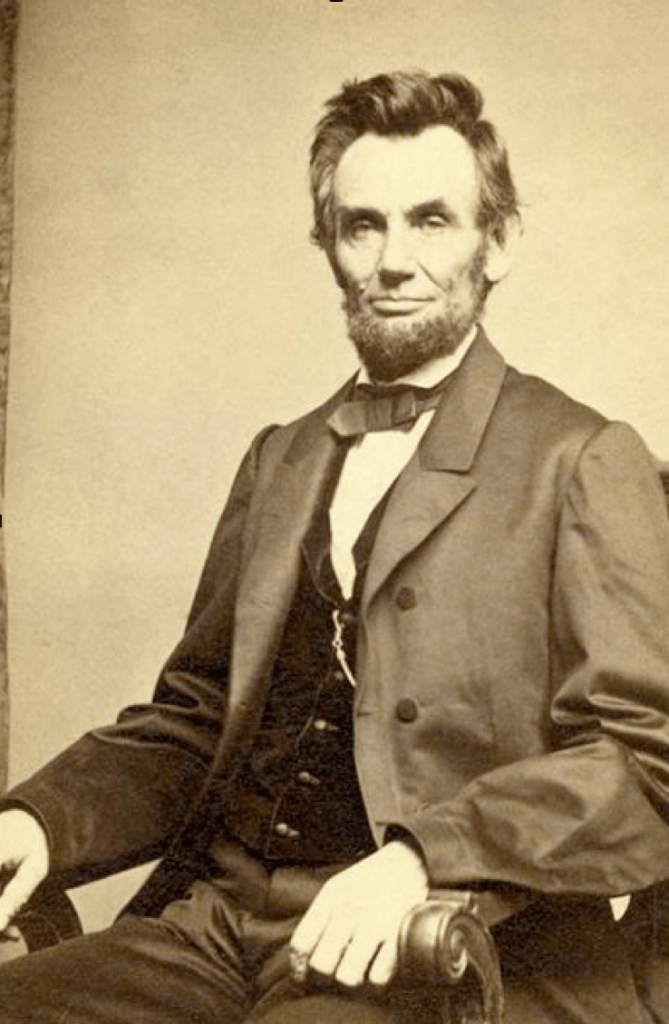
“I put it up when I researched the history of this house.” She said, she knew such a place would be full of history and Robin agreed even though she frowned at Abe and glared at him as if he weren’t welcome as he talked about the big dreams he had when the picture was taken, back when he was just a young lawyer, and found that lawyering wasn’t enough to quell whatever thirst he had in him although he didn’t say this last part because Mrs. Toussant was saying how presidential he looked already and made Robin agree through her frown and he protested that he’d been far from presidential that day, but hoped he’d managed to acquire the trait somewhere along the line, and half-jokingly said he hoped to reacquire it at some point in the near future and he stayed there long into the night as Mrs. Toussant told him of her great-grandmother escaping slavery to run to New York and spending the rest of her days looking over her shoulder and how she was the first college graduate in her family and found her right family name and took it so she wouldn’t have a slave name to carry all her life and how Robin was her niece, her brother’s child, and her brother was a drug addict who would try to get straight every so often and stand out on the sidewalk with the Mexicans out in Jamaica trying to get some construction work, about how it was his own fault really, despite all his self-pitying and crying he’d never had a chance, he’d brought it on himself, as Robin’s frown grew nastier until Abe agreed to stay in the spare bedroom, just until he found more suitable lodging, a sparsely furnished room with a tall lamp, a desk in the corner, and a lumpy bed where he lay and told himself that this start was at least as good as a log cabin, and wondered what being president in the twenty-first century would be like.
And how did everyone feel about Lincoln’s ambitions?
Mrs. Toussant believed he would most definitely be president again. She believed in the Great Man Theory of History, despite it having fallen out of favor the last hundred years or so. She believed a Lincoln presidency would usher in a new golden age: for the world, the country, the city, and herself. “After all,” she said, “being the president’s landlord must count for something. Perhaps not a cabinet position…”
Her niece was not so certain. She was not a proponent of the Great Man Theory of History. She did not believe great men come along and use their charm and intelligence and power to pull society along towards their vision. She believed that society moves itself, choosing appropriate leaders to put at the head of an inevitable wave of change. She believed the greatest force in the world is luck.
ABRAHAM LINCOLN WAS BORN IN A LOG CABIN. THIS IS ONE OF THE MOST WELL-KNOWN FACTS ABOUT LINCOLN. IT IS ESSENTIAL TO THE MYTH OF LINCOLN AND SERVES TO PROP UP THE CLAIM THAT AMERICA WILL REWARD THOSE WHO WORK HARD.
MARY TODD LINCOLN CAME FROM A WEALTHY SLAVE-OWNING FAMILY. THIS FACT IS NOT NEARLY AS WELL-KNOWN. TO INFORM PEOPLE OF THIS FACT WOULD BE GAUCHE, AS IT DOES NOT WORK TO PROP UP THE CLAIM THAT AMERICA WILL REWARD THOSE WHO WORK HARD.
MANY HARD WORKERS WHO WERE BORN IN LOG CABINS NEVER BECAME PRESIDENT, OR LAWYERS, OR MARRIED WEALTHY SLAVEOWNERS, OR EVER LIVED ANYWHERE OTHER THAN LOG CABINS. THIS FACT IS KNOWN TO ALL, BUT IGNORED BY ALL BUT THE MOST DANGEROUS OF RADICALS.
“How I wish it were not written in the constitution that the president must be alive!” Mrs. Toussant wailed. “I know that my niece, Robin, who loves me like a mother–or more precisely, as an aunt who raised her as a mother would–claims the constitution says no such thing. However, two indisputable facts dispute this claim of hers: first, she is not a constitutional scholar so far as I know; and second, I am fairly certain there has never been a dead president. Washington: alive. Adams: alive. Jefferson: alive. All the others whose names I’ve forgotten: alive.”
“My life seems to be nothing but a series of problems to solve,” Kuranski said. “Even as a young child, problem-solving was my number one activity. What, after all, is a boy to do if he is not particularly gifted with a great deal of intelligence, or size? Both brains and brawn eluded me. Not to mention charm. But what I do possess–in spades–is guile, and the ability to solve problems. And right now, I have a problem. Thus is the fate of the middle manager.
“You’re no longer bringing in the customers, Mr. Lincoln.
“At one time, I had to post Kanye on the revolving doors just to avoid accidents, the line was so long. You filled the air with your ripping yarns. But now? Now, the line barely reaches past the printers! Your stories are growing old. You seem bored. And you never, but never, cross promote any of our items. Would it hurt you to maybe work in how much a portable fax machine might’ve helped at Gettysburg? Or if someone’d been able to text you a warning at that theater? Maybe talk about how nice stationary helped inspire some of those speeches you’re so famous for. This isn’t some ethical dilemma for you, is it? Here. Take some of these brochures. Read up on them during your off-hours. Here’s a nice one on Hammermill copy paper. Clorox disinfectant wipes. And, here, odor blocking trash bags. See? You don’t need to go big here. Just look through them. Become acquainted. Maybe find a way to slip them into your little homespun wisdoms that you like to go on about. That’s not asking too much, is it?”
Lincoln sat in the back booth of a bar. His hands rested on the table, around a pint glass of beer. This is a universal position, understood in bars and works of fiction the world over, to mean frustration, or unhappiness of some sort. Lincoln’s hands looked as if ready to strangle the glass. He was no longer able to speak to Mrs. Toussant at night. He was too tired, or he had to read his pamphlets, or she was already asleep by the time he got home, or she was angry with him because he was behind in his rent still, or he had decided to go out with Kanye and Brittany. There didn’t seem to be as much time in the day as he remembered there being. He hadn’t worked towards becoming president again in a long, long time. “The Rs don’t want me running for anything, let alone president,” he was saying. Only Kanye and Brittany listened to him. Strangers in the bar ignored him. No one noticed him anymore, not the way they did when he first came back. “Go to the Ds,” Brittany said. “I did. They wanted to honor me just like the Rs had. They said I stood for the ideals of their party. ‘But I was an R,’ I told them. ‘Oh, that’s all in the past,’ they told me. They honored me for representing fairness and equality and standing up for civil rights and liberties and possibly being gay and giving good speeches and splitting rails. But they had no interest in letting me run for anything.” “Well, that doesn’t seem very fair,” everyone told him. “They told me I wasn’t up on current events, the world had changed, and that they thought it might be unconstitutional to have a dead president. Then they made a joke about my picture being on money. That’s the night I was attacked on the street.” “You weren’t attacked. You were gay bashed,” Brittany told him. “They attacked you for being gay,” Kanye explained. “I’m gay?” Lincoln asked, although they didnt know how to answer because they didn’t know if he meant old-timey gay, i.e. happy, or if he meant gay gay. “You, Abe,” Kanye said. “Have become what psychologists refer to as a ‘projective test’. People don’t know what to make of you. So they project their own dark drives onto you.” Kanye had gone to college and knew things like this. “That’s not what a projective test means,” Brittany argued. “A projective test is when everyone keeps showing you ink blots that look like your parents.” “Kuranski has me working in the back next week. This isn’t working out quite the way I expected.”
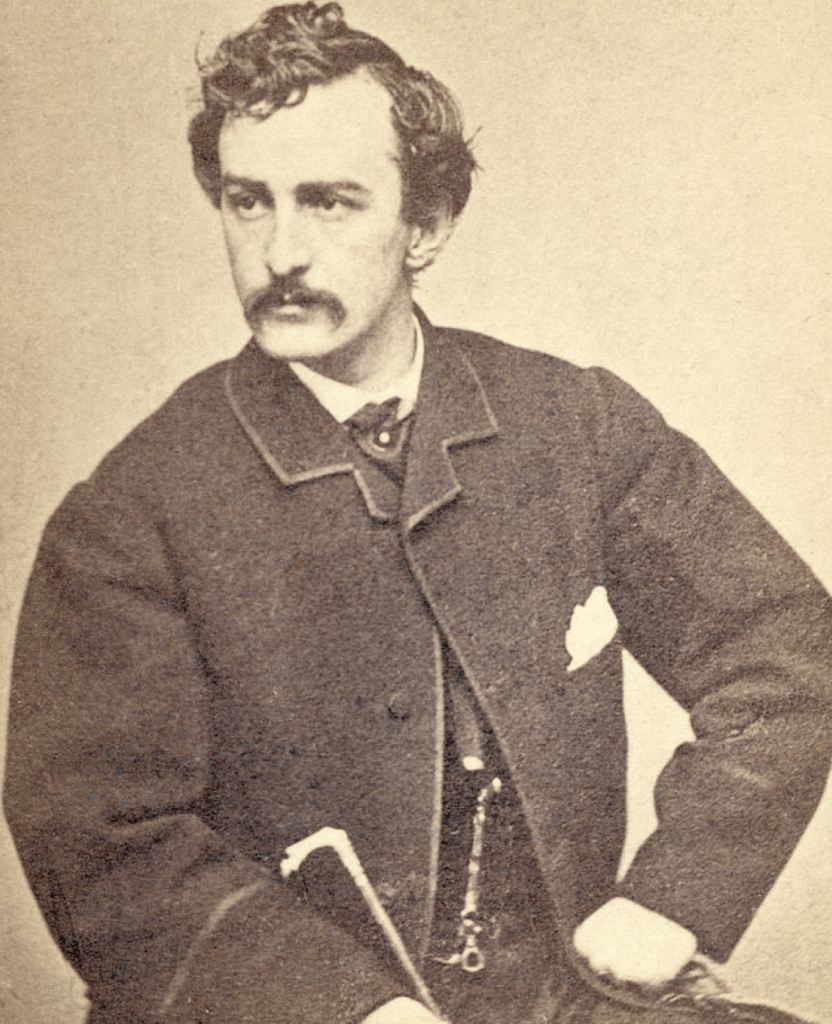
Boothe, as he walked through the streets of Illinois, wondered: “Is it a weakness to know you are a vain man, yet to embrace that vanity? For I am a vain man. That much, I know, is true. That much, I accept. And I do this, this accepting, for one reason, and one reason alone: for my vanity is large in its scope, and it is this very largeness that allows me to forgive it. Were I a smaller man–like my father, like my brothers–my vanity would be of a smaller nature. I’d rejoice in my good looks, revel in my Thespianic talents–which, I am aware, are quite vast, the largest in the Boothe lineage. And were I a man like my father, or Edwin, this would be enough. But I am not such a man. My vanity is not sated by such meaninglessness. If it were, would I shrug off all those in the afterlife who mistake me for Edgar Allen Poe? Of course not. But such mistakes mean nothing to me. For my aims are set higher: I aim to bring justice to this world…
“Such a humble aim! Even in its humility, my vanity carries with it a certain greatness. For my vanity does not even serve me so much as it serves my fellow man! I’m asked why I find it so important to track him down. This – this humility – is why. It is its own justification, humility. With this, tyranny may truly be eradicated, from this world and the next. This is why I leave the afterlife again and again to track him down. To catch Lincoln and bring him back to where he can do no harm, and to take in a play or two.”
(THE PRECEDING HAS BEEN TRANSLATED INTO ENGLISH FROM THE ORIGINAL.)
BOOTHE TO LINCOLN:
CRITICIZE
KIDNAP
YELL LATIN
SHOOT IN THE HEAD
KILL
REKILL
LINCOLN TO BOOTHE:
SEE PLAY
APPLAUD
STAND
TRY TO VISIT AFTERWARDS
AVOID IN THE AFTERLIFE
A sort of desperation began to creep in to Lincoln’s thoughts and words. “I need to focus,” he said. “I’m doing nothing to become a success and fear the longer I stay in this position, the bleaker my chances become.” He seemed beside himself. “Try to relax,” everyone told him. “You seem perturbed.” “You’ll give yourself agita.” “Or cardiac issues.” “Or the big C. God forbid.” “God forbid.” “Yes, God forbid. But that’s where the big C comes from. It comes from stress.” “Or smoking.” “Smoking plus stress. But I’m pretty sure it’s the stress, mainly. The stress moves through the cigarettes.” “No more beers after tonight.” “No more beers? “None.” “None?” “And no weed.” (“What?”) “Or speed. Or the ocksies. Or horse. Or huffing. Or molly. Or strawberry diesel. Or la cocarina. Or the psylicibin. Or lysergic. Time to focus.”
They ordered another round of beers anyway, including two for Abe since, if this was going to be his last night drinking, they figured he should probably be getting as many as he could handle. Everyone wondered what it would be like to stop drinking. They wondered if he’d one day forget the taste and then stop missing it. “I don’t even get why he’s giving it up.” People began to whisper around him. “He wants to be a success.” “And he can’t be president.” “I don’t think he has to be president. It could be something else.” “Like what?” “Like a CEO?” “Or a reality show star.” They asked each other where the concept of success ever came from in the first place and agreed that it meant something different for everybody, and if it meant something different for everybody, then it all boiled down to being, essentially, a meaningless word and just something people used to drive themselves crazy.
Boothe, meanwhile, had found Lincoln: he sat at the bar listening to Lincoln’s complaints. He was not happy he had found Lincoln. He was never happy for finding Lincoln. Everytime Boothe found him, Lincoln was already complaining. “Such weakness,” he thought. “Always with the questioning, the self-pity. This is what they think of as a great leader!”
He drank his beer and scowled at Lincoln’s frailty and at the number of non-white people sitting near him.
He was glad, though, for what he would do to Lincoln. Again. “Soon,” he thought to himself.
Lincoln never noticed Boothe. He was too focused on himself, and Boothe was wearing a baseball cap.
After Mrs. Toussant complained one time too many about the late rent, Abe again asked Kuranski for more hours. So Kuranski shut down Abe’s computer-desk, took out the velvet ropes. He moved Lincoln to the back, where he lifted boxes all day, broke out into a sweat, and felt his back get stiffer and stiffer until one day he could barely move. When he walked, he shuffled his right foot along the ground to avoid the pain.
EVERYONE WANTS TO BE A SUCCESS. THIS IS UNDERSTOOD. THERE IS SOMETHING INHERENTLY WRONG WITH YOU IF YOU DO NOT WANT TO BE A SUCCESS. THE SUCCESSFUL REAL ESTATE MILLIONAIRE SHAREd THE SECRETS TO HIS WEALTH IN A 3-DAY SEMINAR THAT COST LINCOLN THE MONEY HE PLANNED TO PAY MRS. TOUSSANT FOR HIS BACK RENT. THE MILLIONAIRE WORE A DARK BLUE SUIT. HE WORE A VERY LONG RED TIE. IT WAS AN EXPENSIVE DARK BLUE SUIT. IT WAS SO EXPENSIVE IT ALMOST DISTRACTED EVERYONE FROM HIS HAIR. HE WAS GOING BALD AND TRYING TO HIDE IT WITH AN ELABORATE COMBOVER. HE REMINDED EVERYONE HE WAS A SUCCESS IN REAL ESTATE, IN GAMING, AND WITH HIS OWN TELEVISION SHOW. HE REMINDED EVERYONE HOW BEAUTIFUL HIS WIFE WAS AND JOKED ABOUT BEING A PLAYBOY AND EVERYONE PRETENDED IT HAD NOTHING TO DO WITH HIS MONEY. HE REMINDED EVERYONE HOW BEAUTIFUL HIS DAUGHTER WAS. HE USED WORDS LIKE “tremendous“, “fantastic” AND “greatest” TO DESCRIBE THE SEMINAR. HE USED “classy” TO DESCRIBE EVERYTHING ELSE HE HAD DONE.
HE TOLD YOU SUCCESS WAS ENTIRELY DEPENDENT UPON YOUR ATTITUDE.
HE DIDN’T MENTION HE WAS BORN INTO WEALTH, AND HIS LEGAL TEAM HELPED HIM AVOID HIS DEBTS, AND THAT HE’D DECLARED BANKRUPTCY SEVERAL TIMES.
ROBIN WOULD CALL HIM LUCKY. AMONG OTHER WORDS.
One day a large shipment of monitors came in. Lincoln rested. He breathed hard. He leaned hard on the top box. He wiped sweat off his forehead. “Tell me,” Kuranski said. “Was it worth it Lincoln?” Kuranski chuckled. “Was all this crap worth coming back for? All this crap we gotta go through? Every stinking day?” He walked into his office.
“God, I hate him,” Lincoln imitated his walk and Brittany laughed. “Walking home at dark…students yelling obscene comments…can’t pay for school…no financial aid…rent…will thieves climb in at night?…trans fats…bottled water…open a cafe?” “There are too many already.” “Book on alternative medicine?” “You aren’t a doctor.” “Machine to stengthen abs in 6 minutes a day?” “No.”
Lincoln visits Cooper Union, walks into the auditorium, and it’s as if the day is February 27, 1860. He remembers a man in a fashionable derby who’d sat at the end of the second row. The man had taken notes, a writer from the Times perhaps. The man smiled as he wrote. Huzzahs went up during the speech. A man towards the back had thrown his hat into the air and Lincoln’s breath had grown quick and shallow with excitement and that feeling of being alive that he only feels when he thinks himself a part of great and important events. He walks towards the stage. Visions of the past engross him so he doesn’t notice the doors swing open again behind him, or hear footsteps, or even the gunshot. Lincoln spins as he falls, to see Boothe, the gun still in his hand. As he hits the ground, he begins to smell Mary’s liniment again and he leaves and comes back again and leaves and he’s President and CEO and slave and clerk and lawyer and a Mexican day worker standing on the corner out in Jamaica and a real estate mogul with bad hair and a gay man beaten on the streets and a kid studying for his SATs that he hopes will get him into a school that’s good enough he won’t have to work in retail anymore until he’s every one of us and he’s lucky and he’s not.
One response to “Random, Stand-Alone Stories”
-
Loved this!
LikeLike

The Fan
This was it. Finally. After 86 friggin’ years of frustration, they were gonna win it all. And they were gonna do it tonight. In four games. There wasn’t gonna be a game 5, no 6, no 7. Tonight.
And they were all gonna watch it over at The Fan’s. Because the Fan had one of those new flatscreens, you see. Plus, he was The Fan: who wouldn’t want to watch with The Fan?
The house was packed. Everyone came in smiling, carrying a six-pack, or chips. Someone made Swedish meatballs. John and Rita from next door brought two large orders of sweet teriyaki wings from Wingin’ It, that new place just over the line in Arlington. Steve, The Fan’s old high school buddy from Brighton, brought Bud Light – he was trying to lose weight since Cathy’d left. Cathy’d hated it in Brighton, with all those college kids pissing in her driveway, puking on her lawn. And she might’ve stayed if Steve had just listened. He didn’t even have to sell the house and move, necessarily, just take the time to listen. The Fan’s Wife had driven all the way out to Roche Bros for a chocolate cheesecake to celebrate with after the game. But she hadn’t asked The Fan before buying it – it was supposed to be a surprise – and she was starting to worry that maybe cheesecake wasn’t quite the way The Fan wanted to celebrate. There seemed something unmanly about it. Maybe she should’ve run it by The Fan first.
They told stories as they waited for the game to begin. Steve told about the time his older brother Jay smashed one of those old-fashioned red batting helmets the Sox used to wear. It was after Dent’s homer in the ’78 playoff game. Jay’d even cursed in front of their parents, who let it go this one time.
Everyone agreed that was a good story, except John. John – who no one liked, but he lived next door and the wives were friendly – was the kind of guy who always had to one-up you. So he told of how his grandfather spit at the TV when Buckner let the ball go between his legs in ’86, then promptly dropped dead.
The guests all reacted with even more shock at that (except Steve, who was pissed). The Fan, though, hadn’t herd. He was beginning to withdraw. He always withdrew before a big game. That’s what the real fans do, the hardcore ones: they care about it more than me and you do. It’s like they have this whole other level, this inherent fan-ness that normal people don’t have. So he sat there, staring, just staring. At, well, nothing. Or maybe he stared at something only he could see. Who knew? The Fan’s Wife looked down at him and wondered what he was thinking. What went through his head when he was like that. She wished he would talk more to her when he was all worked up for a game like this. Or when he was mad. Or happy. Or bored. Or pretty much anything.
Once the game began, The Fan’s wife leaned over to hug and kiss The Fan. “They’re going to do it. I know they are,” she said.
The Fan nodded, but he was too intent on the game to bother kissing back, or to even glance at her. All the men shot angry looks at her behind her back, because predicting victory like that was a huge jinx. No one said anything to her, though. What did women know about such things, after all?
Once they started playing, Steve oohed and ahhed at every fly ball until John scolded him.
“Not,” he said. “And not is the operative word here: not every single fly fucking ball is a motherfucking home run.”
Rita hit him in the shoulder and stared daggers at him: all the wives felt bad for poor Steve, who was going through a divorce.
The Fan’s Wife sat behind The Fan, rubbing his shoulders as he pursed his lips and balled his hands into fists and chewed his knuckles. She often joked that if she’d known what a big fan he was, she never would’ve married him. But she was happy for him, and just a little sad that he seemed so alone in his intensity.
And that’s how it remained for the full 9 innings until the game finally ended, and the Red Sox had won: John and Rita hugged and kissed; Steve jumped up and down; The Fan’s Wife hugged and kissed The Fan. Everyone screamed. The ladies took turns hugging Steve, since he had no one special to celebrate with. Everyone screamed some more. John and Steve even hugged each other.
They all said how they couldn’t believe it, that they never thought they’d live to see it, and that this was the greatest day in their lives. “Oh, how I wish old granddad and Uncle Joey were still alive to see it,” John said. Then he put his fist to his mouth as he held back tears. “I’ve got to call my brother, Stan,” Steve said and pulled out his cell.
Then, one by one, they turned to The Fan, who hadn’t moved. He stood rigid, in front of his chair, arms still crossed. Silent tears rolled down his cheeks and they all smiled because they admired The Fan’s devotion.
“What a fan,” they thought. “Such dedication.” They slapped him on the back and squeezed his shoulder. They smiled at each other. They hoped the others could all read their admiration for The Fan in those smiles.
Except he never stopped.
They watched him from behind and stared at each other. Their smiles disappeared. They began to think how he’d cried enough and now was maybe the time to stop.
“Hey, let it out,” they said. “It’s been a long time.” “I know how you feel.” “You, sir, are one hell of a fan,” John laughed.
When small sobs started to escape his lips, The Fan’s Wife hugged him and rubbed his back.
“Honey,” she said. “It’s okay now.”
“Is he okay?” they asked. “Should we, like, maybe, call someone?”
They asked this to his wife, which is the number one sign that a party is over: when the guests start talking about the host in front of him.
So The Fan’s Wife suggested maybe they all call it a night, that The Fan was fine. He was just intense, you know how he can get.
After they’d all gone, she ignored all the empty bottles and bowls of dip and cocktail sauce and salsa and led him upstairs to help him get undressed. She lay awake as the bed shook, even after The Fan had fallen asleep, and stared at the recreation of da Vinci’s Last Supper that hung above the dresser. She watched the apostles’ small, gossipy circles, and held her breath each time The Fan’s moans seemed to subside, or the light shaking of the bed to wane.
The crying still hadn’t stopped by morning, so she called The Fan’s boss and told him that The Fan had the flu.
“This is certainly unusual, Mrs. The Fan,” answered Mr. Kuranski, whom she’d met twice at office Christmas parties. He’d come across as polite enough, but was something of a hard-ass according to The Fan, and needlessly so, as was probably best exemplified by the fact that he insisted on being called Mister Kuranski in a setting where even the CEO was simply known as Bob. “I don’t understand why you’re calling for him. He really should be talking to me himself.”
“He’s very sick.”
“He must be.”
“Can’t even speak,” she said. “Not a word. It all came on suddenly last night.”
“Seems a lot of people suddenly grew ill last night,” he answered, sounding pretty darned skeptical to her, which only got her nervous, causing her to stammer twice. “Uh…uh.”
“I’ll expect to see him tomorrow, then,” Mr. Kuranski said and hung up.
She went back to tell The Fan that Mr. Kuranski sounded angry, and to give him a kiss through his tears before she left. His crying was too strong for him to talk. When he looked up at her, he looked as though he were trying to tell her something with his eyes, but she didn’t know what, so she just smiled back.
At lunchtime, she stepped out of the office for a bit of air. She’d almost nodded off a few times in front of the computer and Kim had joked how exciting the game had been and the locker room interviews afterwards. “But I guess you know that already, don’t you?” Once outside, she used her cell to call home. No one answered. She figured The Fan must have taken a nap, or, hopefully, gone to the corner to grab a sub or something. She smiled to herself over just how crazy men could get with their sports and decided she’d try to talk to him and ask him not to get that crazy anymore because it was kind of scary.
When she pulled up in the driveway, she felt as if she’d awoken from a dream. She found The Fan sitting at the kitchen table, his back to her, staring out at the pile of leaves he’d raked the other day and left there against the side of the garage.
“Feeling better, hun?” She walked over for a kiss, so relieved he was back to himself that she felt like breaking down and crying herself.
When The Fan turned and she saw tears running down his cheeks still, she jumped back without that kiss.
“Still? Rita said over the phone.
“I’m worried.”
“How’s it even possible?”
“I made an appointment with our primary, but what’ll he do?” I don’t even know if there’s anything to do. You ever heard of anything like this? I’ve been looking on the web, but I can’t find a thing.”
“I’d think he’d get dehydrated after awhile.”
The Fan’s Wife closed her eyes and put her head in her hands. She sighed.
“Do you think it’s stress?” Rita whispered.
“I don’t know what it is. I just hope the doctor can do something.”
“John said he’s just a real big fan.”
“Listen. You can’t tell John this is still going on. You can’t tell anyone.”
“Of course not.”
They hung up and The Fan’s Wife grabbed two aspirin. Her head ached.
She called Mr. Kuranski again the next morning and promised him The Fan would be going to the doctor today, that he still couldn’t talk, and they were both hoping the doctor would have something to help. Then she called out sick, too, and pulled the car to the back of the driveway so The Fan could sneak out the kitchen door. His sobs had turned to loud wails for about ten minutes just after he woke up and, even though they’d grown silent now, she was afraid they might get loud again and create some sort of scene involving people looking at her and embarrassment and maybe even police activity of some sort.
At the doctor’s office, The Fan’s hands shook too much from the crying, so she filled out the forms for him. A young pregnant woman, with a boy who was maybe two and stared at The Fan for the full forty-five minutes they waited, sat across from them. The woman refused to raise her head from the People she was reading. The rest of the waiting room was empty except for the posters warning patients of HIV and diabetes and high blood pressure.
“The doctor will be right in,” the nurse said after she’d led them into the examination room and taken The Fan’s vitals. She looked at The Fan, then smiled at The Fan’s Wife. Before leaving, she grabbed a box of tissues from the corner of the room and put them down next to The Fan.
When the doctor came in, he put his stethoscope up to The Fan’s chest and back and asked him to take deep breaths through the tears. Then he frowned and asked if The Fan had been under a lot of stress lately.
“My husband’s not some kind of nut,” The Fan’s Wife said. “You barely examined him.”
“What would you have me examine him for? He has no symptoms. Crying is not a physical disease. That’s all I can do, I can recommend a mental health provider… ”
When The Fan lost his job, he was not eligible for disability or unemployment. The Fan’s Wife began sleeping on the sofa. She simply couldn’t stay up all night listening to that crying and then have to do a full day’s work. The sofa was too narrow, so that her arm hung off one side, its weight pulling her closer to the edge so that she spent the night feeling as if she were on the verge of falling off. Which made her try to sleep on her side, but she had never been comfortable like that and developed a sharp pain in her upper back. She ended up taking turns on her back until she felt too close to falling, then on her side until the pain woke her, then on her back again, and over and over like that through the night with very little actual sleeping taking place at all. She developed bags under her eyes and thought she could see crow’s feet starting. She felt as though she were losing her youth over the course of one winter.
The reporter said he wanted to do a human interest story. “Don’t you think your husband’s story should be out there?” he asked.
“I prefer to keep my husband’s story in here, thank you,” she said. She wanted to get away from this open door and back into the kitchen where the oven made it warm.
“Please,” he said. “Its three degrees out here. I’ve come all this way…”
“I’m sure your car is nice and warm.”
“Wouldn’t you like your side reported?”
She closed the door on him.
After the story came out, she could see how the cashier at the supermarket looked differently at her. She walked into the break room sometimes at work, and would hear the whispered conversation that seemed to stop suddenly. USA Today printed a small blurb about it. CNN ran a tease on their bottom line. The National Enquirer photo looked as if it had been taken from John and Rita’s back porch.
“Folks…folks…there’s a story…maybe you’ve heard about it. It’s really…(laughter)…it’s really the gosh awful weirdest thing I’ve ever heard. It seems there’s a gentleman up in the great liberal bastion of Taxachusetts. The man’s been crying…that’s right, you heard me right folks…a grown man who’s been crying for months! He’s literally been sitting in his house, blubbering away for months on end. No one can figure out how or why. But, folks, I ask you, is this something we would’ve been hearing about back when this country was the envy of the world? You ever hear of a Texan crying? (laughter)”
–transcript of The Rush Limbaugh Show
“But maybe – just maybe – we can look at Mr. The Fan as a symbol for our times, a representation of the working class under today’s neo-liberal governing model, a model that cares only about helping the wealthy distance themselves even further from the poor and is leaving more and more of us behind. In that sense, perhaps we are all The Fan, sitting in our window, crying for a generation lost.”
–editorial in The Nation
The Fan’s Wife pulled the shades and had her groceries delivered. For the next several months, no one was sure if The Fan and his wife were home or not. Except for work, she stopped going out altogether, stopped picking up the phone. She looked in the mirror one day and saw her mother’s sloped shoulders and dry, brittle hair. She kept the papers and news away from The Fan, fearing he might cry even more if he saw the jokes about him.
As for him: he merely sat and cried, and looked sadder by the day. One day, he handed her a note with shaky writing that might have said sorry on it. Writing is difficult when you are shaking with sobs. She hugged him, left the room, and flushed it down the toilet.
The birds were already chirping outside when The Fan’s Wife woke up. The edges of the shades were bright, and she knew the sun blazed. She grabbed her set of car keys and the blue overnight bag The Fan had bought her a few birthdays ago, the one with “Barbara” monogrammed in gold script by the handle, just enough clothes to get her through the first few days stuffed inside, then tiptoed into the dark hallway and kitchen, towards the back door.
The starting of the car woke The Fan, although he wasn’t aware that that was what had roused him, and he lay in bed until the alarm – which was set on radio play – went off. The WEEI morning guy talked about that afternoon’s ring ceremony. “In front of the Yankees!” He kept saying and cheering and some sound effect like a maniac’s laugh was played over and over. Streams of sunlight rushed through the window and warmed the empty half of the bed. The Fan spread out, smiled, and stopped crying.
One response to “Random, Stand-Alone Stories”
-
Loved this!
LikeLike
Leave a reply to Kim Cancel reply
A Few Ideas
1.
My idea for implementing a 4-day work week, based on a complicated 3-shift structure that allows businesses to remain open 24/7 had had one of those days: it was exhausted, with the kind of headache that felt like a spike right above its eyes. All it wanted to do was get home and nap. But, of course, when it walked down the stairs to the E train, the platform was packed with angry, sweaty commuters, the kind of packed that made it near-impossible to even slip on through and find a relatively empty space.
The air down in the station hung heavy, wet, and difficult to inhale. The harder my idea tried to breathe, the more the air just dissipated in its throat, as if it were too heavy to get all the way into the lungs.
But my idea, being my idea, wasn’t one to give up so easily.
So it sighed, hung its head for a second, then crept along the edge of the platform. Not a few times, it felt as though it might pitch forward and tumble down onto the tracks. My idea grew dizzy as it shuffled along. The air lacked the oxygen it needed to survive.
Eventually, though, it found a spot. Not a great spot, and nowhere near where it usually liked to stand, but at least it was a foot or so from the edge and felt safe, comparatively speaking.
My idea stood and waited, its sweat-soaked shirt stuck to the flesh under its arms.
When the train suddenly burst into the station, just enough air was pushed ahead to create the slightest of breezes, just enough to cool the beads of sweat on my idea’s forehead.
Luckily, a pair of doors stopped right in front of it, and my idea waited a second to let any passengers off. A 50ish businessman took advantage and pushed past my idea, his metal briefcase’s sharp corner stabbing into my idea’s kneecap. My idea gasped, then limped into the car. It squeezed past a hipster in the doorway, two young ladies complaining about their boss, and a construction worker who smelled of beer, before finding a spot leaning against the door at the end of the car.
My idea put its head back against the window and thought of the days before these doors were locked, when you could prop them open and the speeding train would cause a wonderful breeze.
But that was long ago and the trains had air conditioning now, which was supposed to be enough. Only the air conditioning on this car didn’t seem to be working. My idea for implementing a 4-day work week, based on a complicated 3-shift structure that allows businesses to remain open 24/7 closed its eyes and tried to breathe.
Only, the breathing grew fast and shallow. My idea felt itself begin to panic and hoped it wouldn’t hyperventilate. The train took off. The back of my idea’s head bounced against the window, along with the bouncing of the train.
Wide-eyed, fully panicked now, it looked around – at the construction worker, the girls, any passenger it could see: were they having difficulties breathing too?
Suddenly, the walls of the car began to close in, and the roof to collapse. The train made a crumpling sound, like tin foil, and folded just as easily. The lights blinked, then went right out. My idea tried to breathe one last time and now nothing, not a thing, passed its lips.
My idea for implementing a 4-day work week, based on a complicated 3-shift structure that allows businesses to remain open 24/7 experienced a split second of confusion and fear as the tunnel collapsed in on the train and it wondered if the other passengers were being crushed, if they were dying too.
2.
My idea to use ozone therapy to reverse the HIV status of positive patients leaned heavily on the bar as it sipped a Jack, neat, hoping if it drank enough, the feeling of having a spike lodged right above its eyes would go away and it’d finally be headache-free for the first time in a long time. The place was practically empty: just my idea; the bartender standing alone near the front, watching the news on TV; and a few guys shooting pool in the back. They were big guys. Huge guys. Loud guys. The kind of guys my idea would be best advised to avoid.
The small TV in the corner showed a news story about a car accident out in Jamaica that killed a beloved grandmother and her honor student grandson. My idea scoffed. “Everyone’s a saint when they die,” it thought. Everything made my idea scoff these days: scoffing or joyless laughing. Those were its only sincere reactions these days.
Everything was just so ridiculous to my idea, which made my idea just want to drink all the bullshit away, especially with the damned headache it always had, the kind that just stabbed right above the eyes. “Grandmother…honor student…” It scoffed again and shook its head.
My idea slumped over the bar and watched the three pool players out the corner of its eye. They laughed a lot and smacked each other on the shoulder, hard, as if trying to hurt each other. The smallest of the three – which was still pretty large – left for a bit and came back with a white bag that filled the place with a sick, greasy smell.
My idea’s stomach growled and it realized it hadn’t eaten since breakfast: an afternoon cup of bodega coffee. The smallest guy dumped out a pile of fries from the bag and squirted packets of ketchup all over them. The others yelled how he’d done a fucking great job all right and he’d get the next game and they hit him on the back again.
My idea barked out a short laugh at friendship itself. It was a bit too drunk to realize these weren’t exactly the kind of guys to be laughing at.
After one slap, the guy stumbled forward and knocked the table just enough to spill most of the fries onto the floor. The three guys stared down. The look of utter confusion on the their faces made my idea laugh again.
Definitely too loud this time.
My idea raised a finger for another shot as the news did a story on insurance fraud and out-of-state license plates. My idea threw back the shot and, as he put the glass down on the bar, saw all three guys’ reflection frowning down on him from the mirror behind all the bottles.
My idea jumped.
Before my idea could think of something to do or say, the small guy – who, remember, was huge – grabbed my idea and spun it around so that my idea had to jump to its feet to avoid falling to the ground along with the stool. They surrounded my idea, which suddenly felt like the smallest idea in the history of ideas. It thought about fighting but was so drunk it couldn’t do much more than wobble as it stood there, looking past the three guys to the pile of fries and thick red ketchup slowly spreading on the floor.
“Somfum funny?” the small guy – who was pretty drunk himself – asked.
My idea opened its mouth to answer, but before it could, a sharp pain suddenly drove into its temple and knocked my idea against the bar. My idea to use ozone therapy to reverse the HIV status of positive patients grabbed at the edge of the bar to keep from falling and the bartender might have said something, but my idea wasn’t sure, especially since it was busy trying to remember how to drive its fist forward, using shoulder and hip. But it was drunk, and pretty scared probably, and just ended up flailing outwards, telegraphing the punch. This was followed by a crunch and pain in its side. Suddenly, my idea was on the floor, gasping for breath. Its cheek stuck to old beer on the linoleum. A boot broke three of its ribs. It heard a loud crack, and suddenly there was pain everywhere.
Boots and stools and cue sticks and bottles and pool balls drove into my idea to use ozone therapy to reverse the HIV status of positive patients, crushing, breaking, smashing, and, finally, killing.
I HAD TO GET OUT OF THE CITY!
IT WAS KILLING ALL OF MY HOPES AND DREAMS!
3.
Now my ideas saunter up to Mayflower Hill and picnic. They pack a soft wool blanket and a Williams-Sonoma Wine Lovers Picnic Basket. They laugh and cavort, eat cheese, drink wine, and pass around a joint. They bring a portable CD player and put on Velvet Underground and Nico and say “god, I just love this song” over and over until one of them points out that they say that after just every song and they all laugh.
“Except The Black Angel’s Death Song or whatever that crap’s called,” my idea for the perfect Homer Simpson joke says and they all laugh because they all agree that’s the worst song on the CD.
My ideas all get a little stoned by the end of the album and some of them start grabbing some of the others’ breasts. They begin to kiss and grope each other and squeeze and caress and stroke and fondle and suck and hump and lick and tongue and fuck each other in the following positions of the Kama Sutra: face to face and the amazon and the arc and the armchair and the deep one and the fusion and the hammock and the mirror of pleasing and the mold and the put under one and the screw and the surprise and the total hug and the trapeze and finally the wheelbarrow, some of which are very difficult without a bed or table or just any piece of furniture that’ll create a sort of bi-level play area.
Then they lie on their backs and look up at the clouds while some of them smoke a cigarette and my idea for the perfect baseball statistic, combining all offensive, defensive, and intangible contributions, says “I don’t think my head’s hurt once since we’ve been out here. I mean, isn’t that amazing? My migraines used to bother me all the time. They’d feel like a spike right above my eyes. But they just disappeared all of a sudden. I tell you, moving out here has worked out perfect. Just perfect.”
“So far, at least,” says my idea for more accurate pace figures in thoroughbred handicapping.
One response to “Random, Stand-Alone Stories”
-
Loved this!
LikeLike

 Michael Arthur Sanderson
Leave a reply to Kim Cancel reply